Slow Money NYC and Stone Barns Center for Sustainable Food and Agriculture present

Earth Day Entrepreneur Showcase: Slow Money and Local Investment Opportunities

Featuring Woody Tasch, Author of Inquiries into the Nature of Slow Money
and Eliot Coleman, Author and Farmer, Four Season Farm, Maine
April 22, 2012 (Earth Day!) 3-5 pm, The Loft
Tickets $75. Limited quantity. Register here today.

What better way to spend Earth Day than with a group of food entrepreneurs and investors who are working “to bring money down to earth”? The Slow Money Alliance now has 14 chapters, including one in New York. More than $16 million has been invested over the past 18 months in over 100 small food enterprises under the Slow Money banner, using a variety of new engagement strategies – investment clubs, investor networks and entrepreneur showcases.

Please join us for a two-hour program featuring Derek Denckla and Brian Kaminer, leaders of Slow Money New York City, and five pioneering food entrepreneurs now seeking capital who will make brief presentations about their enterprises: Brooklyn Grange, a commercial rooftop farm business in NYC building its second airy acre and apiary; First Field Ketchup, an NJ organic farm expanding its line of value-added products; Farm to Table CoPackers, a growing small-batch food processing facility for small farms and local artisans in the Hudson Valley; Window Farms, manufacturing a DIY kit for home-grown food; and New York Mouth, opening an online store featuring local, indie food makers from the NY area. Eliot Coleman, who serves on the Board of Directors for Slow Money, will lay out an opportunity for partners to create their own ventures based on his open source farm technology called (you guessed it . . .): Slow Tools. Woody Tasch will share the financial innovations Slow Money chapters and local investors are using to put some of their money to work close to home, where they can see, touch, and taste the results.

If you are a good food activist, an impact investor, a sustainable business entrepreneur, a foundation trustee or program officer, or an individual who is wondering whether there is life after fast money and fast food, this program presents a wonderful opportunity to participate in Slow Money, what Entrepreneur.com calls “one of the top five trends in finance” and Rodale calls “one of the top ten trends in organics.”

To register, click here: http://www.stonebarnscenter.org/slow-money-earth-day-2012/?date=2012-04-22

Posted in Events, Regional Chapters, Small Food Networks, Uncategorized | Tagged , , , , , | Leave a comment

FOR IMMEDIATE RELEASE: December 8, 2011

Contact: Renee Hunt, Program Director—(614) 421-2022 Ext. 205, renee@oeffa.org

Lauren Ketcham, Communications Coordinator—(614) 421-2022 Ext. 203, lauren@oeffa.org

Ohio’s Largest Sustainable Food and Farm Conference:

Online Registration Now Open

Press Release

Granville, Ohio—Registration is now open for the Ohio Ecological Food and Farm Association’s (OEFFA) 33rd annual conference, Sowing the Seeds of Our Food Sovereignty, February 18-19, 2012 in Granville, Ohio (Licking County).

The state’s largest sustainable food and farm conference, the event draws more than 1,000 attendees from across Ohio and the Midwest, and has sold out in advance the past two years. This year’s conference will feature keynote speakers Woody Tasch and Andrew Kimbrell; more than 70 informative, hands-on workshops; two featured pre-conference events on February 17; a trade show; a fun and educational kids’ conference and child care area; locally-sourced and organic homemade meals, and Saturday evening entertainment.

“Our conference title says a lot about what we believe and what we’re trying to accomplish,” says OEFFA Program Director Renee Hunt. “Farmers, businesses, chefs, and consumers are working together to reclaim our food sovereignty—rebuilding local food systems and Ohio’s rural farming communities, demanding access to healthy, organic food and information about how that food is produced, and relearning sustainable agriculture practices that nourish our bodies, our communities, and the environment.”

Keynote Speakers

Saturday’s keynote lecture titled, “Slow Money: Investing as if Food, Farms, and Fertility Matter,” will be provided by Woody Tasch. Tasch is the chairman of the Slow Money Alliance and inspired the Slow Money movement by writing Inquiries into the Nature of Slow Money: Investing as if Food, Farms, and Fertility Mattered.

The Slow Money Alliance advocates for sustainable financial investments that support local, community-based food and farm businesses. So far, $4.5 million has been invested in 16 small food enterprises through Slow Money’s national gatherings. In the last year, $5 million more has been invested through Slow Money chapters.

For 10 years, Tasch was chairman of Investors’ Circle, which has invested $133 million in 200 early stage sustainability businesses since 1992. Tasch also served as treasurer of the Jessie Smith Noyes Foundation where, as part of an innovative mission-related venture capital program, a substantial investment was made in Stonyfield Farm, now the world’s largest maker of organic yogurt.

Sunday’s keynote lecture titled, “The Future of Food,” will be provided by Andrew Kimbrell. Kimbrell is one of the country’s leading environmental attorneys and the founder and executive director of the Center for Food Safety (CFS) and the International Center for Technology Assessment (CTA). The Center for Food Safety pursues public education, policy advocacy, and legal actions to curtail industrial agricultural production methods that harm human health and the environment, including genetic engineering.

Kimbrell is author of 101 Ways to Help Save the Earth, The Human Body Shop: The Engineering and Marketing of Life, Your Right to Know: Genetic Engineering and the Secret Changes in Your Food and general editor of Fatal Harvest: The Tragedy of Industrial Agriculture. His articles have appeared in numerous law reviews, technology journals, magazines, and newspapers across the country, and he has been featured in documentary films, including “The Future of Food.” In 1994, Utne Reader named Kimbrell one of the world’s leading 100 visionaries. In 2007, he was named one of the 50 people most likely to save the planet by The Guardian-U.K.

Workshops

The conference will also feature more than 70 hands-on, educational workshops and cooking demonstrations with topics including: bramble and strawberry production; no-till farming; edible landscaping; pest management; compost; pork, beef, and lamb production; poultry nutrition; food preservation; food safety; social investing; farm and business planning; renewable energy; mushroom production; season extension; mulch; cover crops; aquaculture; dairy health; recordkeeping; Farm Bill policy; co-ops; small space gardening; companion planting; organic certification; fiber production; permaculture; tax planning; genetic engineering; field crops; grassroots organizing; conservation funding; cheesemaking, and more.

In addition, the conference will offer a three part series of workshops about high volume hydraulic fracturing (HVHF), commonly known as “fracking,” which is an intensive extraction process that uses a high pressure chemical cocktail to fracture rock to release natural gas. The workshops are designed to educate farmers, landowners, and concerned citizens about the environmental and social risks of this process, existing laws and regulations, and what actions can be taken by landowners and community organizers.

The conference will also offer the following featured conference guests:

- Jeff Moyer, the director of farm operations at the Rodale Institute and an expert on organic crop production, will discuss no-till organic farming, utilizing cover crops to enhance soil fertility, and effective compost management.

- Gary Zimmer, farmer, author, educator, and president of Midwestern Bio-Ag, will discuss nutritional considerations for pasture-based dairy operations.

- Dan Ravicher, a patent law professor and executive director of the Public Patent Foundation (PUBPAT), will provide an update on a federal lawsuit against Monsanto which seeks preemptive court protection for farmers who may be accused of patent infringement if they become contaminated by Monsanto’s genetically engineered seed.

Pre-Conference Events

Two on-site pre-conference events will also be featured on February 17 from 10 a.m. to 4 p.m.

The first, “Slow Money for Ohio? Financing the Local Food System,” will feature Slow Money Alliance founder and chairman Woody Tasch and a panel of experts, to talk about Slow Money, the challenges of capitalizing the local food economy, and successful strategies to nurture sustainable food systems and businesses.

The second pre-conference event, “No Till, No Drill, No Problem: Integrating No-Till Methods into Organic Production Systems,” will feature Jeff Moyer, director of farm operations at the Rodale Institute, to discuss practical ways to build soil fertility and tilth, suppress weeds, and manage cover crop rotations, to increase production.

Additional Features

The conference will also feature a kid’s conference offering a variety of exciting workshops for children ages 6-12; a playroom for children under 6; a book signing by Woody Tasch and The Contrary Farmer, Gene Logsdon; an exhibit hall offering an interesting array of information, products, services and resources that relate to sustainable agriculture; a raffle; a non-denominational Sunday service; and Saturday evening entertainment, including a performance by The Back Porch Swing Band and a film screening and discussion of The Greenhorns.

OEFFA Sponsors

OEFFA’s 33rd annual conference is being sponsored by Chipotle Mexican Grill, Northstar Café, Organic Valley/CROPP, Granville Exempted Village Schools, Mustard Seed Market, Whole Foods Market Dublin, Snowville Creamery, Edible Ohio Valley, Canal Junction Farmstead Cheese, Casa Nueva, Earthineer, Earth Tools, Green B.E.A.N. Delivery, Jeni’s Splendid Ice Cream, Lucky Cat Bakery, Midwest Bio-Ag, Ohio Earth Food, OEFFA Grain Growers Chapter, Stauf’s Coffee Roasters, Stonyfield Farm, Swainway Urban Farm, Whole Hog BBQ, Andelain Fields, C-TEC, Curly Tail Organic Farm, DNO Produce, Eden Foods, King Family Farm, Luna Burger, Marshy Meadows Farm, Mrs. Miller’s Homemade Noodles, Rodale Institute, Swainway Farms, Bad Dog Acres, Bexley Natural Market, Blue Jacket Dairy, Bluebird Farm, Crumbs Bakery, Equine Veterinary Dental Services, Flying J Farm, Glad Annie’s Old World Baklava, Green Fields Farm, Hartzler Family Dairy, The Hills Market, Hirzel Farms/ Dei Fratelli, Kitchen Basics, Leo Dick and Sons, Locust Run Farm, OSU School of Environment and Natural Resources Social Responsibility Initiative, Phoenix Organics, Shagbark Mill, Schmidt Family Farms, Stan Evans Bakery, and Wayward Seed Farm.

“No matter who you are—a farmer or a conscientious consumer—there’s something valuable for you at the conference. We look forward to sharing this programming with everyone,” concluded Hunt.

###

About OEFFA
The Ohio Ecological Food and Farm Association (OEFFA) is a state-wide, grassroots, nonprofit organization founded in 1979 by farmers, gardeners, and conscientious eaters working together to create and promote a sustainable and healthful food and farming system. For more information, go to www.oeffa.org.

Conference Registration
To register or for more information about the conference, including maps, directions, workshop descriptions, speakers, and a schedule, go to http://www.oeffa.org/conference2012.php. For additional questions, contact Renee Hunt at (614) 421-2022 Ext. 205 or renee@oeffa.org. The 2010 and 2011 conferences sold out in advance, so early registration is encouraged to guarantee a spot.

Artwork and Images
For the conference art image or pictures of keynote speakers, contact Lauren Ketcham at (614) 421-2022 Ext. 203 or lauren@oeffa.org. For photographs of the 2011 conference, go to http://www.redplanetwd.com/oeffa/conference2011.php.

Press Passes and Interviews with Keynote Speakers
OEFFA offers a limited number of press passes to members of the media who would like to attend one or both days of the conference. We can also help members of the press schedule pre-conference interviews with our keynote speakers. To arrange an interview or request a press pass, contact Lauren Ketcham at (614) 421-2022 Ext. 203 or lauren@oeffa.org

Event Calendar Announcement
The Ohio Ecological Food and Farm Association’s (OEFFA) 33rd annual conference, Sowing the Seeds of Our Food Sovereignty, February 18-19 in Granville, Ohio is Ohio’s largest sustainable agriculture conference. The event will feature keynote speakers Woody Tasch and Andrew Kimbrell, more than 70 workshops, local and organic meals, kids’ conference, childcare, a trade show, Saturday evening entertainment, and two featured pre-conference events on February 17. Workshop topics include farming, gardening, homesteading, cooking, green living, livestock production, business planning, and marketing. To register, or for more information about the conference, go to www.oeffa.org or contact Renee Hunt at (614) 421-2022 Ext. 205 or renee@oeffa.org.

Posted in Uncategorized | Leave a comment

Dear Slow Money Friends,

KCBS Reports on Slow Money
The San Francisco Chronicle

850 folks from 35 states, 3 Canadian provinces and six other countries attended Slow Money’s 3rd National Gathering—our biggest event yet.

Everywhere, you could feel the momentum that has been building over the past year—catalyzing more than $10 million of investments in small food enterprises and the emergence of more than a dozen local Slow Money chapters around the country.

In this newsletter, we are very pleased to share with you what attendees, journalists and bloggers had to say about the event.

We’re also very pleased to be able to include here the presentations at the Entrepreneur Showcase. We share with so many attendees the sense that the savvy and vision of these small food entrepreneurs are cause for hope. We trust that many of you who could not be with us in San Francisco will not only find inspiration in these presentations, but will be moved to join one or more of the post-gathering groups that are exploring potential investments.

In the weeks ahead, we look forward to sharing other exciting news: Sandy River Charitable Trust’s matching seed grant to the Soil Trust; BSW Wealth Partner’s new impact bonds that recognize and support Slow Money; and Mamma Chia’s dedication of 1% of its revenue to the Soil Trust.

But for now, we hope this newsletter will give you a taste of what happened last month at Fort Mason.

Thanks from the Slow Money team to everyone who contributed time, money and energy to the gathering, and for your continued engagement, which holds such promise for the future of food, farms and fertility.

Sincerely,

Woody, Michael, David and the Board

Entrepreneur Showcase

If the show could have been stolen, it would have been stolen by Farmer John Bledsoe. Click here to see the show.

It was our privilege to feature these 30 entrepreneurs at this year’s showcase. We look forward to doing whatever we can to support them, as they lead the way to fixing our food system and our economy.

All of the entrepreneur presentations from Fort Mason are presented here. Each presentation is 5 minutes long and includes both video and accompanying slides. If you would like to contact any of these entrepreneurs or connect with other interested investors, use these resources:

1. Entrepreneur Contact Info (PDF).

2. Showcase Follow Up Forum.

Attendees Speak

“Slow Money’s Third National Gathering made me feel that we just might have a chance to turn things around!”

Bu Nygrens, Veritable Vegetable, San Francisco, CA

“Slow Money’s 2011 national gathering was both extremely inspiring and extremely practical. We were asked to simultaneously entertain big ideas—ideas that are sorely needed—and to tangibly craft and support specific solutions. The event and the larger process of which it is part hold great promise.”

Gary Nabhan, Conservation Biologist, Patagonia, AZ

“I am an MBA with a couple of decades experience in business that have left me largely unsatisfied. The concepts of Slow Money resonate very strongly with my growing misgivings about business and our economic system. Slow Money has a chance to make a real difference in our world.”

Claude Arpels, New York, NY

“It’s about time someone is putting the financial questions right at the center of the good food movement. That is where they belong.”

Jessica Prentice, Three Stone Hearth, Berkeley, CA

“Not only is Slow Money the best thing happening in local food, it has helped me define our Foundation’s role in the local food movement.”

Tim Wightman, President, Farm-to-Consumer Foundation

“IN SOIL WE TRUST!”

“Slow Money’s progress since the inaugural meeting in Santa Fe is remarkable. Slow Money is going to grow into a national movement, sending exactly the right message at the right time.”

Chip Comins, Founder, AREDAY, Aspen, CO

“Seeing 30 inspiring entrepreneurs present their investment- ready businesses makes it all very tangible. Something is happening across the country. Sustainable food and agriculture is on the rise. Goosebumps.”

Arno Hesse, private investor, San Francisco, CA

Paul Muller, Wes Jackson, Leslie Christian, Tom Steyer, Matt Flannery, Simran Sethi

“The world class thought leadership was off the charts. But so was the opportunity to work with the other Slow Money regional leaders on the nitty-gritty of putting our financial resources into local food economies. I left even more inspired, and I didn’t think that was possible.”

Carol Peppe Hewitt, Slow Money North Carolina, Pittsboro, NC

“The gathering fired me up. It really inspired me to see how much on the ground change is happening since the last national gathering. So much experiential content to share now.”

Jeff Rosen, CFO, Solidago Foundation, Northampton, MA

“Slow Money holds much hope for the future of my farm, my community, and my retirement fund!”

Casey O’Leary, Earthly Delights Farm, Boise, ID

“The gathering put forward the beautiful and creative initiatives being implemented on the ground by dozens of Slow Money groups around the country. It is out of these experiments and entrepreneurial efforts that the new restorative economy will take shape.”

Marco Vangelisti, private investor, Berkeley, CA

“We would be wise to follow the trends and direction of the Slow Money movement.”

SocialFinance.ca

“More and more committed individuals are implementing numerous small creative projects across the nation.”

EcoLocalizer.com

“Small Potatoes Investment Clubs. Love it. More within reach for middle-class people like myself.”

Amy Kiser, Ecology Center, Berkeley, CA

“As a finance professional, I enjoyed the breakout with the other advisors. It was great to have the reality check they provided for folks, and I learned from them.”

Christopher Peck, Natural Investments, Windsor, CA

“Slow Money Case Studies. I got to hear from entrepreneurs who had raised capital about how they did it and how deals were structured.”

Tina Prevatte, Farmhand Foods, Durham, NC

“Both RSF and Mission Markets were awesome because they explained social capital markets, triple bottom line investing. Vermont Jobs Funds and the Ohio Cooperative was an amazing session discussing the development of local markets and supply chain.”

Carla Mays, San Francisco, CA


Attendee Videos

Forty National Gathering attendees were asked what they look forward to in a Slow Money world. Click here.


Join Us!

Want to add your voice to this growing national conversation?

SIGN and Share the Slow Money Principles.

Become a Member.

Move Some of Your Money Now.

Forward this Newsletter to a Few Friends.

WAIT… WE MEAN IT… FORWARD THIS NEWSLETTER TO A FEW FRIENDS…


Books

Point Reyes Books, the conference bookseller, has created an online Slow Money bookstore which features all of the titles that we offered at the event, plus many others of interest to Slow Money folks.

“We are inspired by the dramatic impact this movement will have on the future of food systems in our local communities.”

Steve Costa and Kate Levinson, Point Reyes Books


DVDs and Recordings

This was our first event to feature live streaming and we are very pleased that more than 2000 folks participated in this way. Audio and video recordings are available from Conference Recording. You can get the entire entrepreneur showcase and all the main stage speakers on DVD. Audio recordings are available for every breakout session. Go here to learn more. Many thanks to Conference Recording for providing us with live streaming.


Sponsors

A special thanks goes to this year’s lead sponsors: Heritage Salvage for furnishing the venue in a way that was truly above and beyond, RSF Social Finance for generous lead support for three years in a row, Investors’ Circle for incubating Slow Money, organic yogurt maker Stonyfield Farms for joining us as a lead sponsor this year, Solidago Foundation for both their generous support and their pioneering mission related investing, GeneroCity for underwriting our film crew from MediaOne, Back to Earth Organic Catering for the food we shared together and the farms they support, Marin Organic for many of our banner images, BSW Wealth Partners for designating Slow Money as one of their recipient NGOs, and finally Mamma Chia, a Slow Money enterprise of 2010 that is now dedicating 1% of sales to the Soil Trust. We hope Mamma Chia’s collaboration with 1% For the Planet and Slow Money will become a role model for companies that are eager to give back, like the farmer, “putting back into the soil what we take out.”

Leslie Christian, CEO Portfolio 21

Melissa Bradley, CEO, Tides

Share this E-mail!

Share on Facebook.

Share on Twitter.


Resources

  1. Principles
  2. Donate
  3. Tell a Friend
  4. Our Website
  5. Bookstore
  6. DVDs, CDs, MP3s

David Montgomery, Soil Scientist

Matt Flannery, CEO, Kiva

Rob Davenport,
One PacificCoast Bank

Tom Steyer and Wes Jackson

Winona LaDuke

Chris Martenson

Tim Crosby, Slow Money Northwest, and Grant Abert, Slow Money Wisoconsin

David Orr, Oberlin College

Bonnie Rukin,
Slow Money Maine


In-Kind Donations

18 Rabbits

Bi-Rite Grocery and Bi-Rite Catering

Campovida


Caprock Oganic Vodka

Equal Exchange

Green Mountain Coffee

Guayaki Lagunitas Brewery 


Laloo’s Goat Milk Ice Cream

Lexicon of Sustainability

Mamma Chia

Marin Sun Farm

Numi Tea


Organic Valley


Paul Dolan Vineyards

Slo Chai

Stonyfield Farms

Taylor’s Tonics 


Taza Chocolate


Two Degrees 


U.S. Pure Water

Event photos provided by: Will Szal, Filiz Telek, Karen Preuss, Laura Matthews, and Caroline Kraus


Thanks to all!

donate Follow us on Facebook and on Twitter

Slow Money
320 Washington Street 4th Floor Brookline MA 02445
We are supported and sustained by our members. Join or find out more here.
If you received this email from a friend, and would like to subscribe click here.

Posted in Events, National Gathering, Press, Slow Money Philosophy, Uncategorized | Leave a comment

By Joan Gussow

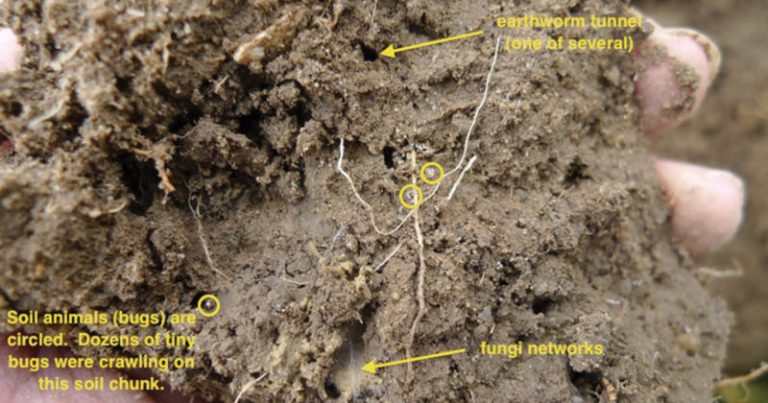
Although I’ve been seriously food gardening for more than 50 years, I was for decades stunningly naïve about the lives that were being lived under my feet.  Then two Christmases ago a friend sent me a marvelous book by Cornell Professor David Wolfe—Tales from the Underground.  It turned out to be one of those rare volumes that change your whole view of the world.  Of course I’ve heard as you surely have about the millions of organisms in the soil—most of them too small to be noticed.  But Wolfe takes it further.

“Push your thumb and index finger into the root zone of a patch of grass and bring up a pinch of earth.  You will likely be holding close to one billion individual living organisms”

Notice he said a pinch; and he said ONE BILLION—

“perhaps ten thousand distinct species of microbes, most of them not yet named, catalogued, or understood. Interwoven with the thousands of wispy root hairs of the grass would be coils of microscopic gossamer-like threads of fungal hyphae, the total length of which would be measured in miles, not inches.”

Let me repeat that phrase of his to remind us all how ignorant we are.  He says there are 10,000 species, not organisms, not individual creatures, but species of microbes, and miles of fungal threads “most of them not yet named, catalogued, or understood.” That’s in just a pinch of earth.

Wolfe goes on to say that we know more about the movement of celestial bodies than we do about the soil, at least partly because it’s nearly impossible to study these organisms in the laboratory.  Scientists are lucky, he says,

. . .if they can come up with the right nutrient mix to culture and study one percent of the microbes found in a typical soil sample.  This poor success rate is due in part to the complex interdependence between subterranean organisms.  They can’t survive when isolated from their neighbors.

So that’s what’s in your farmer’s dirt and your dirt, and mine when we dig it—billions of interdependent organisms about which we know very little.

And that brings me to my war story, which is about the laboratory modification of plant genes known as genetic engineering which I will call GE from here on.  There is widespread public ignorance in this country about GE.  Most people, for example, think they aren’t eating anything made with genetically-engineered crops, but since 94% of soy and 88% of corn planted in the U.S. are planted to biotech crops—and since products made from soy and corn are in almost all processed foods—most people are living in a dream.

The great majority of these two crops—soy and corn—are what are called Round-up Ready, meaning that they are engineered to survive being sprayed with the weed killer Round-Up—Monsanto’s proprietary name for the chemical glyphosate.  In other words, a farmer can simply plant his or her crop, and when it comes up and is growing, the farmer can spray the whole field with Round-up, which will kill only the weeds.  This, of course, means that a hell of a lot of glyphosate is being sprayed on U.S farm fields.

Last year, the USDA held meetings with various stakeholders asking whether alfalfa, the nation’s principal forage crop—the crop most fed to animals—should be approved for unregulated planting in a Round-up ready form.  The organic community was universally opposed, fearing—knowing really—that pollen from biotech alfalfa could contaminate any organic alfalfa growing nearby, thus threatening the entire organic dairy industry.  (Because, as you may know, the only guarantee you have that you’re not eating GE foods is the USDA organic label)  This January, before the decision was made, a noted soil scientist, Emeritus Professor Don Huber of Purdue University, wrote a letter to USDA Secretary Vilsak, describing a series of very disturbing problems affecting production agriculture that appeared to be related to glyphosate and urging that the decision be postponed to allow for more research.

The identified problems included infertility and early-term abortions in cattle and hogs fed on GMO crops—largely corn and soy—a loss of the next generation of animals that was putting some dairy farmers out of business. And researchers in the field were noticing a rise of harmful fungi and parasites, while benefical fungi and other organisms that help plants utilize minerals were declining.  (those are some of the millions of organisms I was talking about earlier.)  Professor Huber warned that there appeared to be a new pathogen apparently related to the use of glyphosate that was affecting the health of plants in the field and animals fed those plants.  “I believe the threat we are facing from this pathogen is unique and of a high-risk status,” Huber wrote.  “In layman’s terms it should be treated as an emergency.”

What Huber was asking was that the decision about whether to approve yet another GE crop be slowed down, allowing time for careful studies.  He sent the letter confidentially to Secretary Vilsak and the letter was leaked—apparently by the secretary’s office.  Once the letter was leaked and made it into the blogosphere, there was major pushback, denunciations, denials and so on.  And by the end of January, Vilsack approved unrestricted planting of GE alfalfa.

So that’s the war story.  Since Professor Huber’s observations have been widely circulated, a number of scientists—in the teeth of a flood of hostile criticism—are reporting problems with crops and animals exposed to Round-up but the USDA has nevertheless decided to allow a glyphosate-resistant form of the nation’s most important forage crop, a crop grown on 20 million (ck)  acres to be planted—thus exposing even more of the soil organisms to this toxin.

What is so shocking about this is that we really know nothing about what we are doing because as David Wolfe’s book points out, we don’t know anything much about the organisms that are down there.  What we do know, as Professor Huber pointed out in a seminar he gave last March in Nebraska, is that “when you change one thing, everything else in the web of life changes in relationship.” So if you spray something on the soil that harms certain organisms others will multiply to take their place.

And that brings me to my peace-making story.  Last year, my beloved garden on the west bank of the Hudson river was utterly destroyed by that river, and at the moment of my stunned grief, Mother Nature kindly presented me with a solution to what had become chronic flooding.  My long narrow piece of land running to the river was higher on both sides as well as on the riverbank where it met the Hudson and at the other end where my house stood, so I gardened in a bathtub into which water not only entered at every high tide, but stayed until it soaked in.

But this storm—the worst of my 15 years in Piermont—arrived at exactly the right time.  Because an old house on the lot north of me had been torn down, it became possible for the first time in 100 years, for a truck and bulldozer to gain entrance to my land.  To cut a long, long story very short, I took up every paver, brick, plant, tree, bulb, corm, whatever, in my yard, brought in 200 yards of fill (the stuff they excavate when they start to construct a new building), put a little top soil over it, and started over, replacing every paver, brick plant, tree, bulb, corm—whatever—and then planting the year’s garden.

Most of the rebuilt garden ended up with some topsoil—some of mine scraped off and put back and some of it donated from the famous MacEnroe Farms in upstate New York.  But in the end, four three by five foot beds, the final ones to be laid out, had no topsoil.  They were filled to the top with subsoil, so rock-hard that when a friend came by and broke up one bed with a pickaxe, we tossed out the lumps from the surface because they were just too unyielding to break up.

What to do with these beds?  I couldn’t just empty them and start over with purchased soil. That sort of solution didn’t fit either my financial constraints, or my beliefs—I was taught by my mentors in sustainability not to rob that much fertility from elsewhere on the planet.  But how did I begin to turn this dead concrete-like stuff into actual fertile soil? I knew how to do it over time, but I wanted to use the bed immediately, and I struggled to imagine what might agree to grow there. 

I did what digging I could, taking out boulders the size of my head and pails of other rocks, and then, I planted nitrogen-fixing soybeans in one of the beds in the hope that they might help improve the terrible stuff it was filled with.  In the next-door bed I decided to plant sweet potatoes, since it had been my experience that sweet potatoes would grow anywhere and at least cover the bed with pretty foliage.  I collected all the garden trash and a crock of kitchen scraps and dug them in as well as I could, raked the bed level, and covered it with two pails of woodchips, the best I could do for short-term soil improvement.

Toward the middle of June, I went out and dug twelve small holes worked a bit of fertilizer and lime into each hole and planted the rooted slips which I had sprouted indoors from one of last-year’s sweet potatoes. As expected, the sweet potato bed produced its usual mountains of beautiful foliage which at least made it look good; and come October, a friend and I dug in to see what had developed underground.

Sweet Potatoes Growing

Considering the situation, I had a remarkably good crop—23 pounds of sweets from a bed 3 ft wide and 12 feet long—but what really astonished me was not the crop but what its presence underground had done to the soil.  In one growing season the sweet potato roots had converted a bed of silt that hardened into rock when you looked at it into a crumbly soil that you could plunge your hand into.

I found the transformation so astounding that in the following days I kept going out and running my fingers through what was now soil instead of dead dirt to convince myself that this miracle had actually happened.  And after vainly trying to find evidence on the web that the beneficial effect of growing sweet potatoes was common knowledge, I concluded that it was not.  Everyone I spoke to was equally stumped until I mentioned my garden miracle to a farmer who is also a trained microbiologist.  He was the first person I had talked to who was not surprised. You can do the same thing with turnips or daikon or any big rooted crop, he told me; the soil organisms that collect around the heavy roots secrete mucilaginous substances that glue together the overly-fine soil particles into clumps to prevent them from turning into rock.  Will wonders never cease.

In preparation for giving a talk to my community garden colleagues I e-mailed the microbiologist/farmer and asked him for details.  He said that the organisms involved are called arbuscular mycorrhizal fungi (AMF), and are classified in the order Glomales,  They collect around the hairs that come off the heavy roots and secrete a compound called glomalin.  This glues together the fine soil particles to prevent them from packing down into a rock-like mass.

And now we come to the reason I feel the need to tell this tale.  The most stunning fact is not that nature can remake my soil in one year if I give her the chance; it’s not that there is an order of organisms called Glomales that literally hold our soil together. No, the most stunning fact is this one, which turned up on the first page of the pamphlet on Glomalin that the farmer sent me in response to my request for more information.

What is Glomalin?

The pamphlet was titled.  And here’s the text.

Glomalin . . . was identified at USDA in the early 1990’s on hyphae (hair-like projections) of arbuscular mycorrhizal fungi (AMF). These fungi are ancient microorganisms that evolved with plants to aid in acquiring nutrients, especially immobile nutrients like phosphorus (P).

So now we know.  Here is a vital organism absolutely critical to the texture, the phosphorus availability, and therefore the production capacity of our soils. As the pamphlet on Glomalin said, it is, literally holding our farms together, and yet—as another soil book of mine reports, glomalin “was considered an unidentified contaminant of humus until 1996!”

And so it is clear that we have grown our food as if Nature were a combatant and we were at war with her, drenching our soils with chemical concentrates, bombing our fields with toxins without knowing anything about what we were doing to the soil organisms about which we know almost nothing.  We have waged war on Nature in order to kill the organisms we deemed our enemies, with no concern that we might, in the process, be killing our friends.  And to turn back to my war story, we have now dumped a single chemical, glyphosate on literally millions of acres of soil, year after year on the assumption that it would do only what we intended it to do—kill weeds.

Yet, as is clear from the data that Professor Huber and others are turning up, that it is probably also doing a lot of damage to the invisible life of the soil.  If we assault these wondrous, beneficent soil organisms sufficiently with chemical weed and insect killers, we can change their functions and their relationships to us and to each other with what may be unimaginable unintended consequences.  When will we stop and think?

In sum, there is life not only visibly around us but invisibly under our feet, and although we are hardly aware of its existence, those underground organisms are perhaps more vital to our long term survival as a species than any of the living things we encounter every day.  So we had better be sure to take care of them and not dismiss them as dirt.

I have no grand answers about how you can do this, as individuals except to pay attention and be aware.  And know that we need to look at every proposed “solution” to what are presented to us as our problems with the understanding that Nature is ultimately in charge.  I personally don’t want to hear any more about how genetic engineering will feed the planet when there is absolutely no evidence to date that it increases yield.  And now it appears to be causing novel plant and animal diseases that could wreak havoc with production and which are not being examined because the companies that control the seeds will not even allow researchers to have them for research.

Had I given my other talk, you would have a history of why you should try to eat more seasonally and locally.  Now,  you’ll just have to take my word for it.  Beginning to shorten our food chain, beginning to bring food growing back home will not solve all, or even most, of the problems the ongoing industrialization of the planet is creating.  But it’s a good start and it’s something all of us can do, every day when we choose what to eat.  And eating well will make us strong to fight all the other battles that we need to fight if we are to keep this planet a home for the human species.  As someone wrote recently, “by . . . embracing the radical notion that we can and must live within the limits of one planet, we will turn this difficult time into an opportunity.”


Joan Gussow

Joan is the author of This Organic Life, at the heart of which is the premise that locally grown food eaten in season makes sense economically, ecologically, and gastronomically. Joan is the former chair of the Jessie Smith Noyes Foundation. She is a Founding Member of Slow Money and a member of our Advisory Board. To get more involved with Slow Money, sign the Principles: http://www.slowmoney.org/principles

Posted in Agriculture, Food Safety, Slow Money Philosophy, Uncategorized | Leave a comment
FOR IMMEDIATE RELEASE

CONTACT:

Cheryl Loe
Communications Project Manager
The Foundation Center
(888) 356-0354 ext. 701
communications@foundationcenter.org

More Foundations Use Investment Assets To Achieve Their Missions

Report Provides First-ever Data on Foundations’
Market-rate Mission-related Investments

New York, NY — October 26, 2011. The number of charitable foundations employing their investment portfolios to achieve a social benefit is on the rise, according to a new Foundation Center report. Key Facts on Mission Investing finds that one-in-seven surveyed foundations are directing their assets to market-rate mission-related investments and/or below-market-rate program-related investments.

By investing endowment dollars to further their charitable missions, these grantmakers — which hold 20 percent of all U.S. foundation assets — are extending the public benefit of their resources.

The Foundation Center has tracked program-related investment activity for years, but its latest report benchmarks for the first time foundation engagement with mission-related investments. It finds that more than half of surveyed foundations currently making mission-related investments began doing so within the past five years, and 28 percent within just the past two years.

“Foundations are striving for greater impact,” said Steven Lawrence, director of research at the Foundation Center and the report’s principal author. “Mission investing puts foundation asset dollars to work in ways that have the potential to go far beyond the social impact of their grantmaking dollars.”

The report also offers perspective from Stephen Viederman, former president of the Jessie Smith Noyes Foundation and a proponent of mission investing, who argues that foundations’ investment strategies should be guided by their broader purpose to benefit the public and that social investing equating to financial underperformance is a myth.

About Program-related Investments and Mission-related Investments

By law foundations are allowed to make program-related investments — often loans, loan guarantees, or equity investments — which are derived from their assets but count toward their charitable distribution requirement. Generally, these investments yield below-market-rate returns. By comparison, market-rate mission-related investments may broadly support a foundation’s programmatic goals but do not count toward its charitable distribution requirements. The potential for mission-related investments is significant: America’s foundations made approximately $46 billion in grants in 2010, whereas their assets totaled more than $600 billion.

Key Facts on Mission Investing (PDF) can be downloaded at no charge from the Gain Knowledge area of the Foundation Center’s web site.

About the Foundation Center
Established in 1956, the Foundation Center is the leading source of information about philanthropy worldwide. Through data, analysis, and training, it connects people who want to change the world to the resources they need to succeed. The Center maintains the most comprehensive database on U.S. and, increasingly, global grantmakers and their grants — a robust, accessible knowledge bank for the sector. It also operates research, education, and training programs designed to advance knowledge of philanthropy at every level. Thousands of people visit the Center’s web site each day and are served in its five regional library/learning centers and its network of more than 450 funding information centers located in public libraries, community foundations, and educational institutions nationwide and around the world. For more information, please visit foundationcenter.org or call (212) 620-4230.

Posted in Uncategorized | Leave a comment

To everyone who joined us and everyone who watched the live stream, thank you!

The Slow Money National Gathering was wonderful! To build momentum and move forward, we are launching our membership campaign. To get more involved, join here.

Let us know how you want to spread the message!

We’ll be keeping the signers of the Slow Money Principles informed about all the great work happening in so many places, and our next steps moving forward from this gathering. Sign here: http://www.slowmoney.org/principles

Posted in Uncategorized | Leave a comment

We are pleased to announce that our Wednesday program will be streamed live!

Update: Our entire main stage program will be streamed – Wednesday – Friday, October 12-14, 2011

Check it out here:

To see the full program, visit http://www.slowmoney.org/national-gathering/program.php

Order your own copies of any session, here: http://www.conferencerecording.com/aaalistTapes.asp?CID=SLO11

Posted in National Gathering | Leave a comment
By Woody Tasch

First, let’s admire this fist:

The Economist put this on its cover earlier this year to celebrate the Arab Spring.

Let’s use it, today, for the Occupy Wall Street movement.

People raising their fists, peacefully, against “greed is good,” against wildly inequitable distribution of wealth, against fortunes made on derivatives and bail outs and what Warren Buffett called “financial weapons of mass destruction.” Fists raised against not just fast money, you know, the stuff of 1,000 pt. drops in the Dow in 20 minutes and the stuff of Goldman Sachs 2010 bonuses “trimmed to $16 billion.”

People raising their fists not against tyrants and political oppression, but against the hegemony of distant bankers and invisible investments, going who knows where on the planet and doing who knows what to who knows who in the ever-accelerating pursuit of maximum financial speed—more, bigger, faster, and unlimited gains for them with their hands on the levers.

I see your fists and raise you a tent. A tent?

Not just any tent. This tent:

In this tent on a farm field in Vermont last year, 600 of us from more than 30 states and several foreign countries gathered and committed $4 million to12 small food entrepreneurs from around the country who are creating jobs, getting toxics out of the food chain, restoring soil fertility, preserving ground water, keeping carbon in the soil and out of the atmosphere, fighting diabetes and otherwise striking at some of the root problems—literally and metaphorically—of our economy and our culture. Showing the way towards life after fast food and fast money.

This is the tent of Slow Money.

In it, we are beginning to put some of our money to work as far from Wall Street as far can be. . .that is, near where we live, in things that we understand, things that bring tangible, immediate benefits to our communities.

We are starting with small food enterprises, which bring fertility to the soil of the economy: small organic farms, grain mills, creameries, local slaughterhouses, seed companies, compost companies, restaurants that source locally, butchers and bakers and, sure, a bee’s-wax candle maker or two, food hubs, community kitchens, community markets, school gardens, niche organic brands, makers of sustainable agricultural inputs, and more.

Could this be the beginning of a new kind of investing, something as powerful, in its own right, as protest? As powerful as conscientious objection? Can we call it conscientious investing?

We invite some of you to take a break, let your arms down and give your fists a rest. For a few days.

Join us in San Francisco, October 12-14, where we will be for the Slow Money’s 3rd National Gathering. Folks from all across the country, and from Europe and South America, too, working together to support a new kind of entrepreneurship, a new kind of investing for the 21st century.

Our goal: one million Americans investing 1% of their money in local food systems, within a decade. We think this is the path towards an economy that is healthier, fairer, more balanced, more sustainable.

While we use the 99%er side of our brain to protest against the bad 1%, let’s also use the slow money side of our brain, and our heart, to roll our sleeves up and begin investing a good 1%.

And maybe, just maybe, we’ll find our way to life after fast money.


Woody Tasch is Chairman of Slow Money, whose 3rd national gathering takes place at Ft. Mason, San Francisco, October 12-14. Tasch is author of Inquiries into the Nature of Slow Money: Investing as if Food, Farms and Fertility Mattered.

Posted in Uncategorized | Leave a comment

Slow Money Gratitude

Attending the previous National Gathering and becoming involved with Slow Money has been transformational for me.  These experiences are the basis for my growing Slow Money gratitude.  After 17 years with my family’s brokerage business, I started a journey to become more aware of the social, environmental and economic impacts of my choices and actions.  Slow Money has been one of the key organizations inspiring me to think, relate and invest differently.  One of the things I am most appreciative of is Slow Money’s resource sharing and acknowledgement of great organizations working in the Community/Impact/Mission Investing Space.  Since the beginning of 2010 I have invested with 8 organizations, from CDFI’s to Non-profit loan funds (including The Carrot Project and RSF Social Finance) to Impact investing funds.

My gratitude is deepest for my new relationships:

-        The passionate and skillful people at Slow Money NYC and other regional chapters

-        The visionary Woody Tasch and dedicated staff of Slow Money

-        Established organizations doing amazing community development and investment work

-        Thought leaders that challenge our understandings and provide vision of a new economy that is regenerative

-        The inspirational farmers and food entrepreneurs who care for our shared natural resources and provide food to our communities

I increasingly appreciate the focus Slow Money has on food. The intersection of knowing where your food comes from and knowing where your money goes is very engaging.  Slow Money addresses both of these most important issues.  They are closely linked and best understood from an integrated perspective.  While the problems are complex, solutions seem within reach. Forging relationships and offering inspiration are necessary for progress and that’s where Slow Money excels.  Redefining the investor in the 21st century means having everyone know their financial participation can make an important difference.  Everyone invests; from food purchases to the financial institutions we do business with, from donations to providing capital to a business.  A sustainable future requires a new mindset that will help us see money differently and understand how we can use it to be part of the positive change with even small actions.  Start by aligning your money with your values.  Begin with one relationship, event, or transaction.  It will be enlightening and impactful.

I hope to see you at the National Gathering in San Francisco on October 12th-14th.

With gratitude,

Brian Kaminer
Slow Money NYC
www.slowmoneynyc.org

Editor’s note: Please join Brian Kaminer, along with over 100 speakers and panelists, and hundreds of us investors, entrepreneurs and concerned citizens for the Slow Money National Gathering, October 12th-14th at Fort Mason in San Francisco, CA. Click here to register and get involved now.

Posted in Events, National Gathering, Regional Chapters, Slow Money Philosophy | Leave a comment

Just a few days after we asked you to tell us about your favorite Slow Money business, the earthworms are off to the races. Over 100 new local food enterprises have been nominated this week, bringing us to a total of over 500 businesses in the running. From tiny CSAs to growing family farms, local-centric restaurants, retailers, wholesalers, niche organic brands and other fascinating businesses of every shape and size.
And now it’s up to you to help us pick a winner!

Click here to see the full list of nominated Slow Money businesses, click on vote for your favorites, or add more great ideas: http://bit.ly/smbiz-vote The contest is already a great success. Part of our goal was simply compiling a list of great businesses embodying our principles. To do that, we knew we needed YOUR knowledge of the local food systems.

And you have performed marvelously so far. Introducing us to new and exciting entrepreneurs, sharing popular favorites from around the country, and encouraging dozens of new entrepreneurs to jump in and say ‘Me too!’ Click here to see the results so far!

But as investors, shoppers and eaters of a new and more sensible kind of economy, we know it‘s not enough simply to find great businesses. We need to help them out with the investments and publicity they really need.

And that’s why we need you to come vote for your favorites. Remember, the top two businesses will each receive a full pass to the Slow Money 3rd National Gathering in San Francisco this October 12-14.

Plus, every business you vote for will be seen by more members of our national network of shoppers, investors and friends through this website.

So don’t delay! Click on over and help us identify and celebrate these small food enterprises that are preserving and restoring fertility.

Posted in Agriculture, Regional Chapters, Slow Money Philosophy, Small Food Networks, Uncategorized | Leave a comment